
DFW Bisnow MPC Panel: Public Financing Tools and Water Strategy Take Center Stage as Development Timelines Stretch
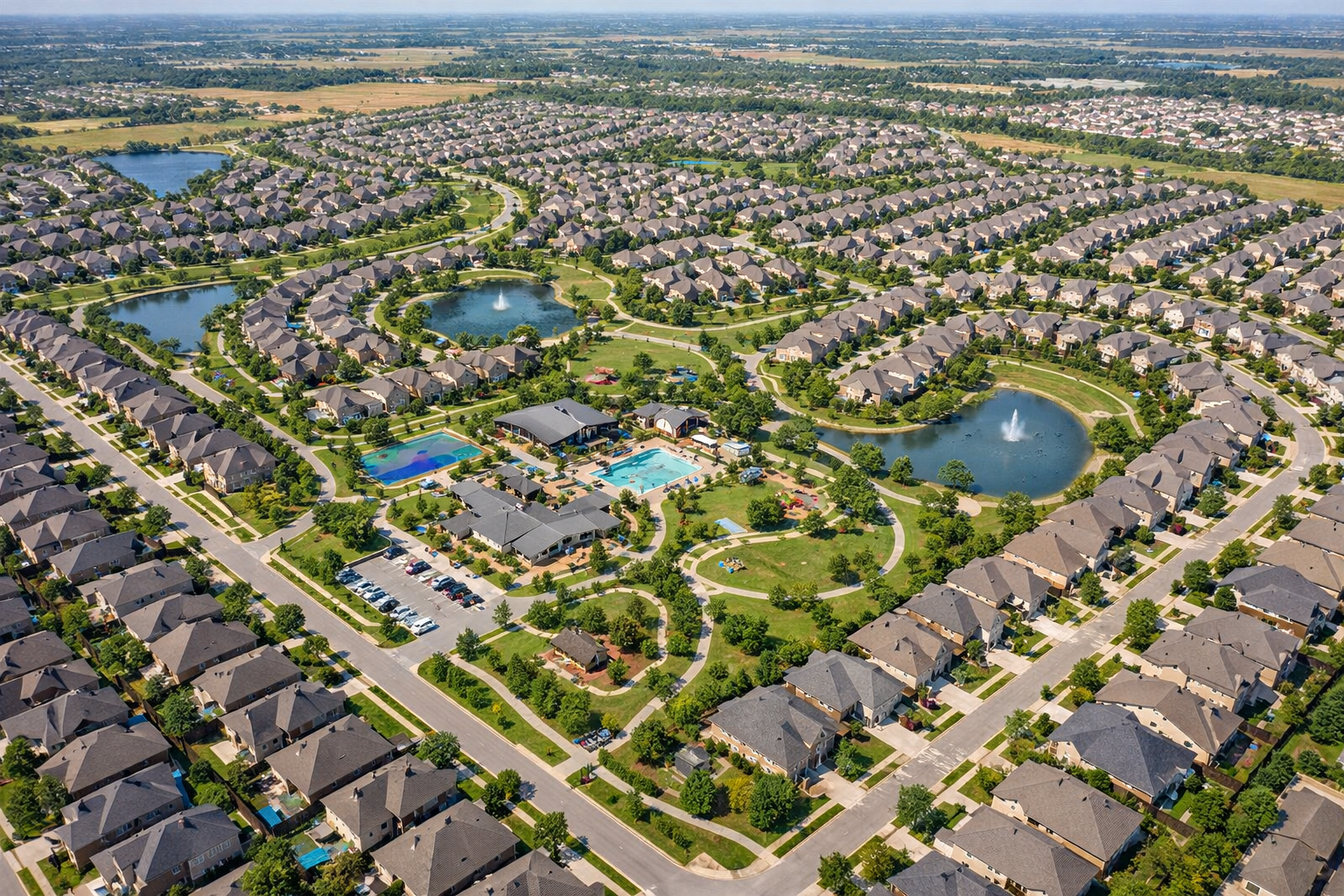
Parker, Texas - At Bisnow’s Master Planned Communities event, panelists delivered a consistent message across the first two sessions. In the current development cycle, master planned communities are being won or lost much earlier than they were in prior years, and the deciding factor is increasingly the ability to structure infrastructure financing up front.
While demand for master planned communities remains strong, the panelists emphasized that feasibility and delivery timelines are being driven by a different set of constraints than the market faced in the last cycle. Public financing tools such as MUDs, PIDs, MMDs, and TIRZ structures were repeatedly cited as the mechanisms that are now essential for maintaining project momentum and reducing the capital burden tied to infrastructure.
Public Financing Tools Are No Longer Optional
Across both panels, district tools were presented as a core requirement for large-scale MPC execution. Developers described a landscape where infrastructure requirements are heavier, entitlement timelines are longer, and lot delivery velocity has slowed. In that environment, the ability to use public financing tools effectively has become a major advantage.
Panelists discussed how MUD and PID structures are being used not simply for reimbursement later in the project, but as a way to solve front-end capital constraints. Several speakers noted that the market has shifted toward long-duration execution, and that early infrastructure dollars are now sitting in the ground longer than they did in previous cycles.
Newer mechanisms, including MUD forwarding bonds, were discussed as a key evolution. Panelists described these tools as a way to activate cash flow back to the developer sooner, improving feasibility and reducing the amount of equity trapped in early-phase infrastructure.
Water Remains the Primary Stress Test
While district financing dominated the structural conversation, water was consistently described as the first major feasibility test.
Panelists stressed that even when a project has a Development Agreement and a will-serve letter, developers are digging deeper into water capacity and delivery timing. Water is increasingly being underwritten as a risk item rather than a box to check.
The discussion also highlighted the growing importance of local Special Utility Districts. Panelists noted that well spacing requirements are increasing, which can affect long-term water supply assumptions and reduce flexibility in fast-growing corridors.
Wastewater Permitting Timelines Are Creating Predictable Delays
Wastewater emerged as the next major bottleneck.
Panelists cited discharge permitting for wastewater package plants as consistently taking 18 to 24 months. That timeline is becoming a predictable drag on project schedules, and developers described wastewater as one of the most underestimated constraints in MPC sequencing.
Several speakers also noted that wastewater treatment plants are increasingly being paired with potential water wells as part of a more integrated infrastructure strategy. Cities, in turn, are moving forward with lease options in some cases to preserve flexibility if plant delivery cannot meet the pace of development.
Reuse Water Is Moving From Concept to Strategy
Reuse water was discussed as an active infrastructure strategy rather than a future trend.
Panelists noted that a significant portion of water ultimately goes into the ground, creating an opportunity for capture, reuse, and diversion into non-potable applications. Examples included HOA well systems for non-potable use, reuse from package plants, and negotiated reuse allocations with municipalities.
The panel’s tone suggested reuse is expected to become a major driver of long-term MPC feasibility, especially in water constrained markets.
Traffic Remains the Biggest Political Issue for Cities
While water is the first technical constraint, panelists emphasized that traffic is often the biggest political constraint.
Cities are increasingly focused on roadway networks, connectivity, and early traffic mitigation. Developers noted that certain improvements such as sidewalks, screening walls, and roadway components are often better funded through district ad valorem taxes than through direct developer equity.
Power Constraints Are Emerging, Driven by Data Centers
Panelists also flagged power as an emerging wildcard, particularly in markets seeing major data center expansion.
One of the most notable comparisons shared was that a single data center can consume power equivalent to 60,000 to 80,000 homes. The implication is that residential growth is now competing with industrial and data infrastructure for available power capacity, creating a new layer of feasibility risk.
MPC Timelines Continue to Stretch
Panelists shared several timeline benchmarks that align with what developers are seeing across the market.
They noted that MPCs commonly take two to three years to get up and running, and five years is a common window for meaningful lot delivery. Entitlement processes were described as consistently taking 12 to 18 months, and major developers cited one to two years to close in many cases.
The panelists attributed slower lot delivery velocity less to demand and more to the combined impact of longer entitlements, infrastructure constraints, district approval timing, and utility sequencing.
A New Cycle Where the Front End Determines the Outcome
The most consistent message from the first two panels was that master planned communities remain a long-term wealth creation vehicle, but the execution bar has risen sharply.
Panelists framed the current environment as one where the front-end structure determines the outcome. Developers who can secure water, underwrite wastewater timelines realistically, incorporate reuse, address traffic early, and utilize public financing tools such as MUD forwarding bonds are positioned to maintain momentum and deliver lots in a market where timelines and capital constraints continue to tighten.
Check out this article next
Matching a Complex Site with the Ideal Use
In this success story, we explore how a complex ±10-acre Frisco land parcel with zoning restrictions and community concerns was successfully matched with the ideal…
Read Article